
Free WCSI Resources
Video Library
10 Caritas Processes® w/ Dr. Jean Watson
In this video, renowned nursing theorist and scholar Dr. Jean Watson explores the Ten Caritas Processes, emphasizing the critical importance of care, self-care, caring science, human caring, and patient relations in healthcare.
As Dr. Watson explains, the Ten Caritas Processes represent a revolutionary approach to nursing that prioritizes authentic human connection and caring over cold, clinical detachment. By focusing on the interconnection between nurse and patient, the Caritas Processes provide a framework for delivering compassionate, holistic care that meets the needs of both the body and the soul.
Through a series of insightful discussions and real-world examples, Dr. Watson explores each of the Ten Caritas Processes in detail, highlighting their unique contributions to the nursing profession. From embracing the ethic of loving kindness to cultivating one's own inner wisdom and caring consciousness, the Caritas Processes provide a roadmap for healthcare providers seeking to deliver more compassionate and patient-centered care.
In addition to exploring the theoretical underpinnings of the Caritas Processes, Dr. Watson also provides practical tips and strategies for integrating these principles into everyday nursing practice. Whether you're a seasoned healthcare professional or a new nursing student, this video is an essential resource for anyone seeking to deepen their understanding of the importance of care, self-care, and human connection in healthcare.
So if you're ready to take your nursing practice to the next level, join Dr. Jean Watson as she explores the transformative power of the Ten Caritas Processes and discover how you can become a more caring, compassionate healthcare provider.
View on YouTube
Intro to the Theory of Human Caring
In this video, esteemed nursing theorist and scholar Dr. Jean Watson introduces viewers to the transformative theory of human caring. As Dr. Watson explains, the theory of human caring represents a paradigm shift in healthcare that places the experience of caring at the heart of the nursing practice.
At its core, the theory of human caring is about fostering authentic connections between healthcare providers and patients. By embracing a philosophy of loving kindness and compassionate care, nurses can help patients feel seen, heard, and valued, promoting healing and wellbeing. However, the theory of human caring is not just about caring for others – it's also about caring for yourself. As Dr. Watson explains, self-care is an essential component of human caring, as nurses who neglect their own needs may struggle to provide effective care for others.
Throughout the video, Dr. Watson emphasizes the importance of advancing one's knowledge of human caring and self-care. From cultivating a deeper understanding of the mind-body-spirit connection to developing practices that promote self-reflection and mindfulness. There are a plethora of ways that nurses can deepen their understanding of human caring and become more effective caregivers.
Whether you're a seasoned healthcare professional or a new nursing student, this video is an essential resource for anyone seeking to deepen their understanding of the Theory of Human Caring. So if you're ready to learn how to become a more caring, compassionate nurse, join Dr. Jean Watson as she shares her insights on the transformative power of human caring.
View on YouTube
Integrating Human Caring into Nursing Education
Dr. Jean Watson offers practical strategies for integrating human caring principles into basic nursing education and practices. The essence of human caring is about building authentic connections with patients, seeing them as unique individuals with their own stories, needs, and aspirations. By embracing a philosophy of compassion and kindness, nurses can help patients feel more engaged in their own care, more optimistic about their health outcomes, and more empowered to take an active role in their healing journey. By cultivating empathy, compassion, self-care, and self-awareness, nurses can help patients feel seen, heard, and valued, promoting healing and wellbeing.
Dr. Watson shares practical tips and strategies for incorporating human caring principles into nursing education and practice, from active listening and self-care to patient-centered communication and interdisciplinary collaboration. This video is an invaluable resource for anyone seeking to deepen their understanding of the transformative power of compassionate care.
Whether you're a seasoned healthcare provider or a new nursing student, this video is an essential resource for anyone seeking to enhance their understanding of the transformative power of compassionate care in nursing.
View on YouTube
The Essence of Human Caring Theory
What does it mean to truly care for another person?
In this illuminating video, nursing theorist and scholar Dr. Jean Watson explores the essence of her revolutionary theory of human caring. Through a series of engaging discussions and real-world examples, Dr. Watson shows how the principles of compassion, love, and kindness can transform the healthcare experience for both patients and providers.
As Dr. Watson explains, the essence of human caring theory is about building genuine connections with patients, seeing them as unique individuals with their own stories, needs, and aspirations. By embracing a philosophy of human caring, nurses can help patients feel more engaged in their own care, more optimistic about their health outcomes, and more empowered to take an active role in their healing journey.
Throughout the video, Dr. Watson shares practical advice for integrating the essence of human caring into everyday nursing practice. in addition to practical tips and modality strategies for integrating the essence of human caring into nursing practice. Whether you're a seasoned healthcare provider or a new nursing student, this video is an essential resource for anyone seeking to enhance their understanding of the transformative power of compassionate care.
View on YouTube
Clinical Practice of Human Caring
Discover the transformative power of implementing Human Caring into a professional practice model with Dr. Jean Watson.
Dr. Watson shares her insights on how to integrate caring into every aspect of patient care, micro practices that can be implemented from the initial assessment to the final discharge, and how to identify a caring moment.
In this video, Dr. Watson emphasizes the importance of treating patients as whole persons, not just a list of medical conditions. She highlights the goal of caring is to create an environment that promotes healing and growth, both physically and emotionally. By implementing caring into clinical practice, healthcare professionals can improve patient outcomes and foster more meaningful patient relationships.
If you're a healthcare professional looking to enhance your patient care skills and provide more compassionate, patient-centered care, then this video is a must-watch. These practical examples and tips for integrating caring into daily practice can help you create a caring environment and make a positive impact on the lives of your patients. For more information visit www.watsoncaringscience.org.
View on YouTube
Conversations with Dr. Jean Watson
Jean Watson shares her academic journey and theoretical contributions to nursing, particularly focusing on caring science and the concept of unitary caring. The session concluded with discussions about nursing theory development, the role of nurses in providing compassionate care, and the future direction of nursing practice with an emphasis on soul care and spiritual support for patients.
Dr. Watson also highlighting key developments in her nursing research and philosophy discussing her early work on loss and grief, her exposure to phenomenology during her PhD, and her subsequent development of the Caritas processes and human caring science. Jean describes her sabbaticals in Australia and Sweden, which influenced her thinking on postmodern nursing and the concept of a caring society. She also mentioned a personal experience with an eye injury that led to her work on sacred science and unitary caring science.
Unitary Caring Science Evolution
Jean discussed the evolution of nursing theory, highlighting its transformation from a theoretical concept to a comprehensive philosophy and scientific worldview rooted in the "Ethic of Belonging." She emphasized that caring moments are transpersonal and can re-pattern the field at a higher vibrational level, aligning with a unitary caring science framework that accommodates multiple theories while introducing a relational and ethical perspective. She concluded by contrasting this holistic approach with the dominant paradigm of separation, noting a global awakening to interconnectedness within a unitary quantum universe.
Nursing Self-Care and Professional Growth
Jean emphasized the importance of personal growth and self-care for nurses to advance the nursing profession and contribute to societal change. She discussed the need for nurses to develop practices that promote loving kindness, equanimity, and compassion for themselves, suggesting various methods such as meditation and connecting with higher consciousness. She also highlighted the role of nurses in creating caring and healing environments in hospitals and the importance of teaching caring science to students to shift the paradigm of nursing education.
Becoming a Nursing Theorist
Dr. Watson also discusses the process of becoming a nursing theorist and publishing a theory. She emphasizes the importance of having a passion and a desire to express something new in nursing. advising aspiring theorists to reflect on their view of humanity, as this will inform their theoretical work. She shares that her first book, which introduced the concept of caritas processes, was written to fill a gap in nursing literature. Watson reveals that the initial drafts of her book received negative feedback from the publisher, highlighting the effort required in theory development and publication.
Sacred Nursing: Soul Care Journey
Jean discussed the importance of creating a sacred and spiritual journey for patients approaching death, emphasizing the need to focus on the soul rather than just the physical body. She highlighted the role of nurses as facilitators of this journey and the significance of holding sacred space and engaging in authentic, transpersonal connections with patients. Jean also mentioned her upcoming conference in Cancun and shared insights on the future of nursing care, which she believes will increasingly focus on soul care. The session concluded with Jean emphasizing the collective impact of small, caring moments and the importance of bringing light and peace into the world through compassionate practice.
View on YouTube
How to Use a Singing Bowl w Dr. Jean Watson
View on YouTube
Podcasts
Books
Soulskin
by Marilyn Krysl

Download Here
Midwife and other Poems on Caring
by Marilyn Krysl
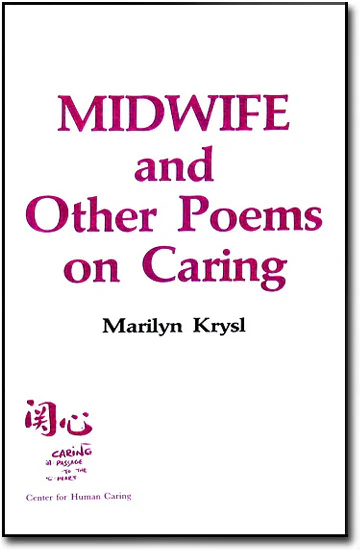
“The poetry in this book provides a new language and a new voice for nursing's quest to seek alternative ways of being. Krysl helps us to push away the rock of apathy, of disinterest, of lassitude, and experience and feel the warm rays of light and energy that shine forth from the human spirit of caring embedded in nursing's most seemingly mundane acts.”
—Dr. Jean Watson
Download Here
Articles
Caring Science: The Heart of NP Practice
by Cameron Duncan, PhD, DNP, APRN, FNP-C, PMHNP-BC, CNE, FAANP
Download for Free
Download Here
The Legacy Map: Mapping a Life of Leadership
by Daniel J. Pesut, PhD, RN, FAAN
Download AbstractDownload Resource Guide
What is Nursing Science?
by Jean Watson, PhD, RN, AHN-BC, FAAN, LL (AAN)
The GROUND-BREAKING ANS publications by Margaret Newman and colleagues re: Caring in the Nursing Discipline remain in limbo.1-3 Newman expanded the definition of Nursing in 1991 by redefining “Nursing is the study of Caring in the human health experience”1(1991:3).
Download Here
Weaving Caring Science into the AACN Essentials: A cross-impact analysis and resource guide
Sara Horton-Deutsch, PhD, RN, PMHCNS, FAAN, ANEF, Caritas Coach® & Leader; Danny G. Willis, DNS, RN, PMHCNS-BC, FAAN; Ludy Llasus, PhD, RN, APRN, NP-C, Caritas Coach®; Mark Beck, DNP, MSN, BS, RN, Caritas Coach® , HeartMath Trainer™; Kerry Fankhauser, DNP, RN, AHN-BC, Caritas Leader®; Deborah Ambrosio-Mawhirter, EdD, MS, RN; Jean Watson, PhD, RN, AHN-BC, FAAN, LL (AAN)
Download Here
Caring Science as a Mature Solution to Global
Healthcare Challenges
by Jean Watson, Chris Griffin, & Sara Horton-Deutsch
Aim: Healthcare systems face a growing challenge: as technology advances, patients increasingly feel like data points in systems that priorities efficiency over empathy. This paper addresses the global healthcare crisis of disconnection, arguing that fundamental change requires putting human experience at the centre through Caring Science principles in nursing.
Background: COVID- 19 clearly revealed this disconnect. While showcasing scientific advances, it exposed gaps in compassionate care and fair access globally. Nurses struggled to maintain human connection while dealing with resource shortages and isolation protocols, proving that advanced medical treatments alone cannot address the physical, emotional, spiritual, and social factors that influence health.
Source of Evidence: This work draws on peer- reviewed studies, contemporary research, and theories of human caring to demonstrate the global responsibility and urgent need for integrating caring practices into healthcare systems. Collectively, this evidence underscores both the necessity of intervention and the effectiveness of Caring Science as a strategy for transforming organizational practices while highlighting a pressing truth: healthcare systems worldwide must move beyond efficiency alone and intentionally weave caring practices into their structures.
Conclusion: This analysis examines Caring Science through three key areas: Relational, Organizational, and Global. Using Watson's Theory of Human Caring and current research, the paper shows how caring relationships can improve through thoughtful use of innovation. Recent healthcare improvements demonstrate promising results when technology integration enhances both nurse empowerment and patient outcomes within frameworks that priorities human connection.
Implications for Nursing: Future directions position Caring Science as a mature, evidence- informed framework for addressing healthcare's complex challenges. The paper calls for ‘sacred activism’—a commitment to protecting caring's essential dimensions while embracing beneficial innovation, positioning nursing to lead healthcare transformation through both the art and science of nursing that honors human dignity.
Download Here
Evaluating Changes in Caring Behaviors of Caritas Coaches Pre and Post the Caritas Coach Education Program
Jean Watson, RN, PhD, AHN-BC, FAAN, LL (AAN);
Jan Anderson, EdD, RN, AHN-BC
Barbara B. Brewer, PhD, RN, FAAN
OBJECTIVE: The aim of this study was to examine program effectiveness in changing Caritas leadership, self-caring behaviors, and perceptions of coworkers of participants who completed the Caritas Coach Ed- ucation Program (CCEP).
BACKGROUND: The CCEP has been a highly suc- cessful education program for individuals who wish to intellectually and experientially learn to teach, live, and practice human caring theory.
METHODS: A pretest-posttest descriptive design was used to evaluate changes in perceptions of self- caring, caritas leadership, and coworker behaviors af- ter completion of CCEP.
RESULTS: The mean scores of all measures improved significantly.
CONCLUSIONS: After completion of CCEP, partici- pants demonstrated statistically significant changes in 3 caritas measures: leadership, coworker, and self-rating. Caritas Coach participants exhibited the greatest change in their self-caring scores.
Download Here
Deathing: Reclaiming the Art of Dying in a Unitary Paradigm
by Anna Biley & Neal S. Rosenburg
ABSTRACT
The energy of language is instrumental to navigating phenomena in a unitary caring paradigm. Tensing the noun “death” into a verb “deathing” holds space for consciously living the experience of dying. Supported by personal reflective narrative, the authors explore the transformative nature of deathing. Through a lens of caring science, the ancient art of doula-ing emerges to invite a deeper understanding of what it means to be human. Reclaiming and deepening the definition of deathing enhances the understanding of the death doula role and creates space for new language and possibilities among nurses and death workers within communities of care.
Download Here
Portuguese Network of Nursing Science for Human Care: A report on a collaborative experience with the Watson Caring Science Institute
Avalible in English & Portuguese
The Portuguese Network of Nursing Science for Human Care, the official representative in Portugal of the Watson Caring Science Institute (WCSI) and affiliated with the Latin-Ibero-American branch (WCSI LIA), was established in March 2021 with the goal of promoting and disseminating the development of the Nursing Science. This working group is particularly concerned with the contemporary state of nursing praxis within the scope of humanized, holistic, and integral care, and with the necessary foundation of nursing research on its own body of knowledge. This paper presents a report on the experience of this international outreach and exchange project, covering its activities from March 2021 to December 2024. This project represents a space for collective construction among 12 countries representing the WCSI, whose director is the prominent nursing theorist Jean Watson. We aim to describe the creation process of the Portuguese Network of Nursing Science for Human Care, its development, and the joint activities carried out with groups from various countries; to share the experience of the nurses who form the network; and to reflect on its dynamics and the strengthening of collaborative spaces in light of current and future challenges.
Its productivity is significant at both national and international levels, with the organization of in-person and online scientific events. However, it is important to diversify activities to include Reflection & Healing groups, Journal Clubs, and a new Workshop Series, as well as to develop a research study on the contribution of Jean Watson’s theoretical framework in Portuguese doctoral theses. The implementation of the Caritas Coach® Education Program in Portuguese, organized by the WCSI, is also anticipated. The Network’s main vision is to be transformative, and we will continue to disseminate knowledge throughout mainland Portugal, the islands, and Latin-Ibero-American countries.
In conclusion, since its foundation, the REDE PT has grounded its work on the universal values of the Processes of Clinical Caritas Veritas, within a collaborative environment that supports the development of nursing and is based on the Science of Unitary Caring.
PhD. CIDNUR - Escola Superior de Enfermagem de Lisboa; Rede Portuguesa da Ciência de Enfermagem para o Cuidado Humano/WCSI LIA
PhD. Rede Portuguesa da Ciência de Enfermagem para o Cuidado Humano/WCSI LIA.
PhD. Instituto Politécnico de Viseu, Escola Superior de Saúde; Centro de Estudos em Educação Tecnologia e Saúde; Rede Portuguesa da Ciência de Enfermagem para o Cuidado Humano/WCSI LIA.
PhD. Instituto Politécnico de Viana do Castelo, Escola Superior de Saúde; UICISA:E; Rede Portuguesa da Ciência de Enfermagem para o Cuidado Humano/WCSI LIA
PhD. Unidade Local de Saúde Almada Seixal; CIDNUR; Rede Portuguesa da Ciência de Enfermagem para o Cuidado Humano/WCSI LIA
Master. Escola Superior de Enfermagem de Lisboa; CIDNUR; Rede Portuguesa da Ciência de Enfermagem para o Cuidado Humano/WCSI LIA.
Master. Unidade Local de Saúde São José; CIDNUR; Rede Portuguesa da Ciência de Enfermagem para o Cuidado Humano/WCSI LIA
Master. Unidade Local de Saúde Amadora/Sintra; CIDNUR; Rede Portuguesa da Ciência de Enfermagem para o Cuidado Humano/WCSI LIA.
Master. Unidade Local de Saúde Lisboa Ocidental; CIDNUR; Rede Portuguesa da Ciência de Enfermagem para o Cuidado Humano/WCSI LIA.
Degree. Unidade Local de Saúde Santa Maria; Rede Portuguesa da Ciência de Enfermagem para o Cuidado Humano/WCSI LIA.
Download English VersionDownload Portuguese Version